


Guide: Normalized Citations
Normalized citations are a metric that measures the impact of a publication according to its context: scientific field, time period and document type. A value greater than 1 indicates that the publication has received more citations than the average for similar works within its discipline, time period and document type.
What is the purpose of this metric? It allows for a fair and equitable comparison between publications within the same discipline, providing further context to the citation count metric.
Metrics and narrative
Sources
How to interpret metrics?
- An FWCI of 1.00 means that the publication has received the expected number of citations based on the global average for similar publications.
- A value greater than 1.00 means that it has been cited more than expected. For example, an FWCI of 1.5 indicates 50 per cent more citations than the average.
- A value less than 1.00 means that it has been cited less than expected.
How do you obtain this metric?

- Log in to Scopus using your IQS credentials.
- Search for the article or publication by title, DOI or another identifier.
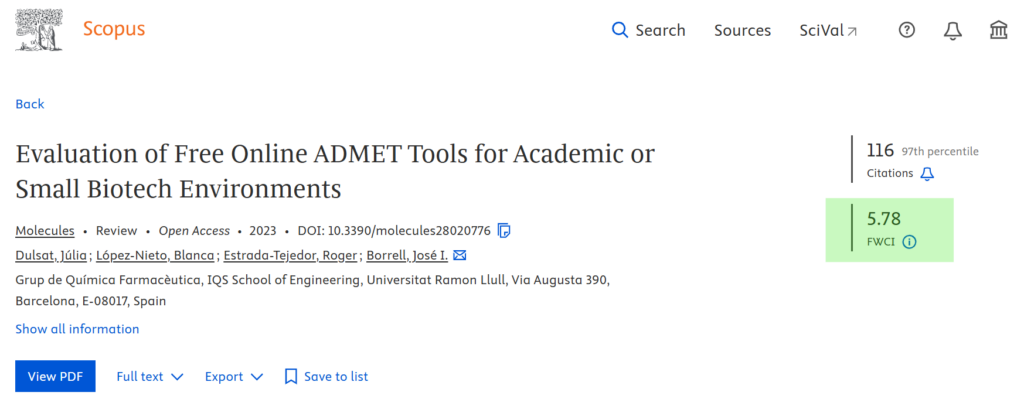
- The FWCI can be found in the full record of the publication.

- Access to OpenAlex.
- Search for the article or publication by title, DOI or another identifier.
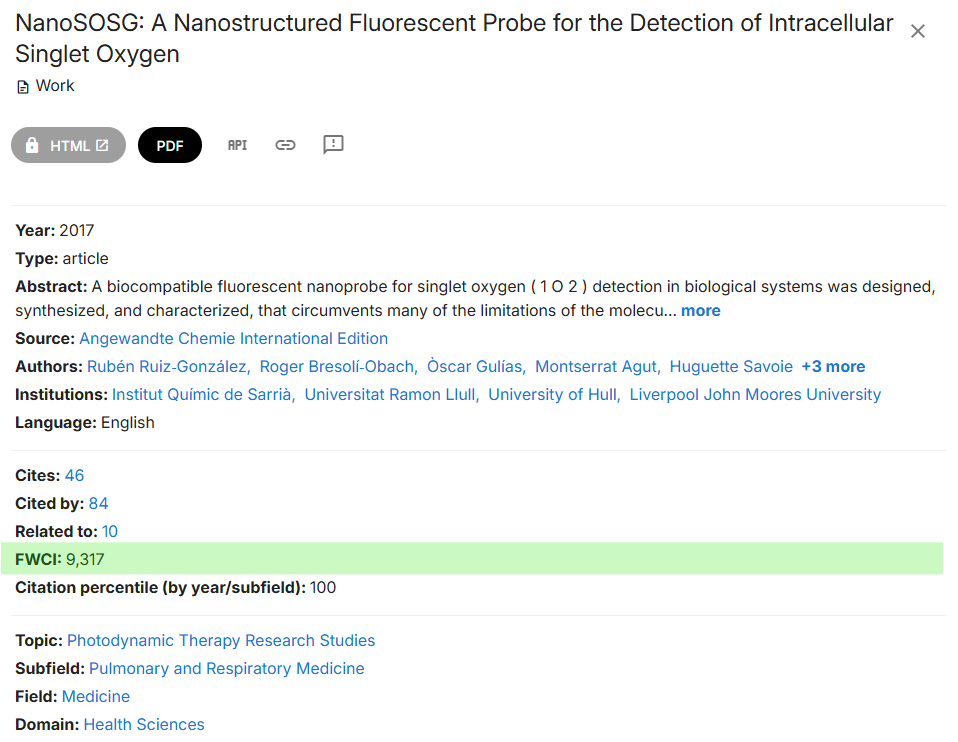
- The FWCI can be found in the full publication record.
Example of a narrative:
Since its publication in 2023 in the journal Molecules, the article has received a total of 116 citations, reflecting a notable level of attention from the scientific community. Its Field-Weighted Citation Impact (FWCI) of 5.78 indicates that it has been cited more than five and a half times as often as the average for other similar papers published in the same year, highlighting its impact and relevance within the field. [Accessed on 19 August 2025].

How to interpret metrics?
- A publication with an FCR of 1.0 has received the same number of citations as the average, whilst an article with an FCR of 2.0 has received twice as many citations as the average in its field of research.
How do I obtain this metric?
- Access to Dimensions.
- Search for the article or publication by title, DOI or another identifier.
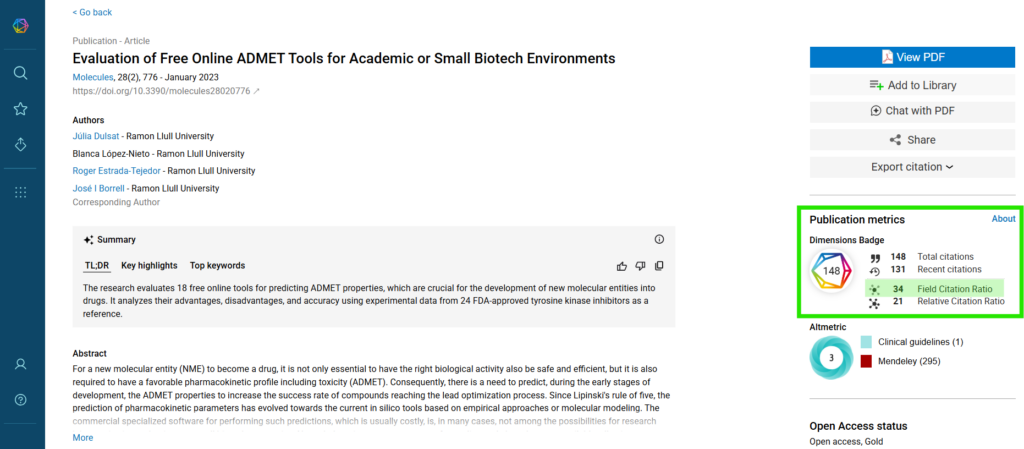
- The FCR can be found in the publication’s full record.
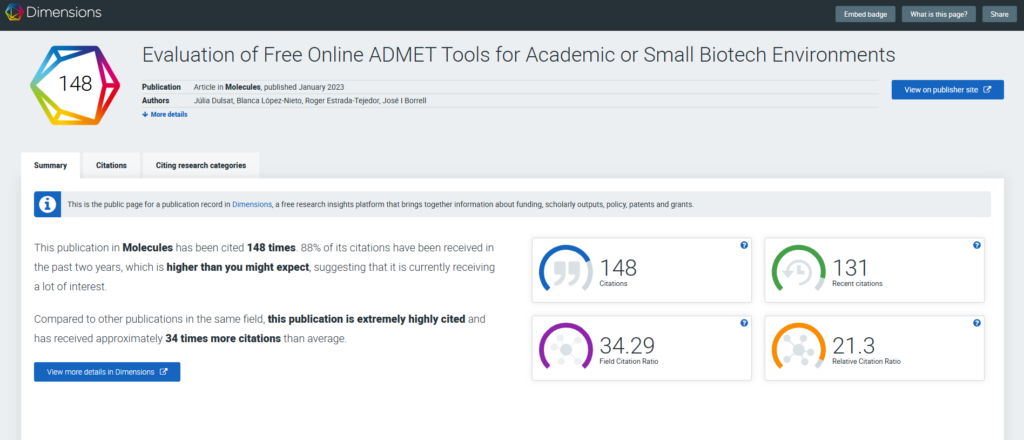
- Clicking on the FCR value opens a new window showing more detailed metrics and a narrative example of how it was calculated.
Guides and other resources
Contact us
If you have any questions about bibliometric indicators or how to draft a narrative justifying your scientific impact, please feel free to contact us.